Frozen Storage in Jeddah: A 2026 Cold Chain Playbook for Growing Brands
Jeddah moves food. As the Kingdom’s Red Sea gateway, the city receives seaborne cargo, feeds a fast-growing population, and supplies hotels along the Makkah corridor. For any brand handling perishables, reliable frozen storage in Jeddah is no longer a nice-to-have — it is the backbone that keeps product safe from the dock to the dinner plate. Get the cold chain right and you protect margin, shelf life, and reputation in one move.
This guide breaks down what modern frozen warehousing actually looks like in 2026, how to choose a partner, and where operators quietly lose money. It is written for founders, procurement leads, and logistics managers who want practical answers, not marketing gloss.
Why Frozen Storage in Jeddah Matters More Than Ever
Saudi Arabia’s cold chain market keeps expanding as the country pushes food security under Vision 2030 and imports climb through Jeddah Islamic Port. Rising demand for frozen seafood, poultry, dairy, and ready meals means warehouse capacity is tight and standards are strict.
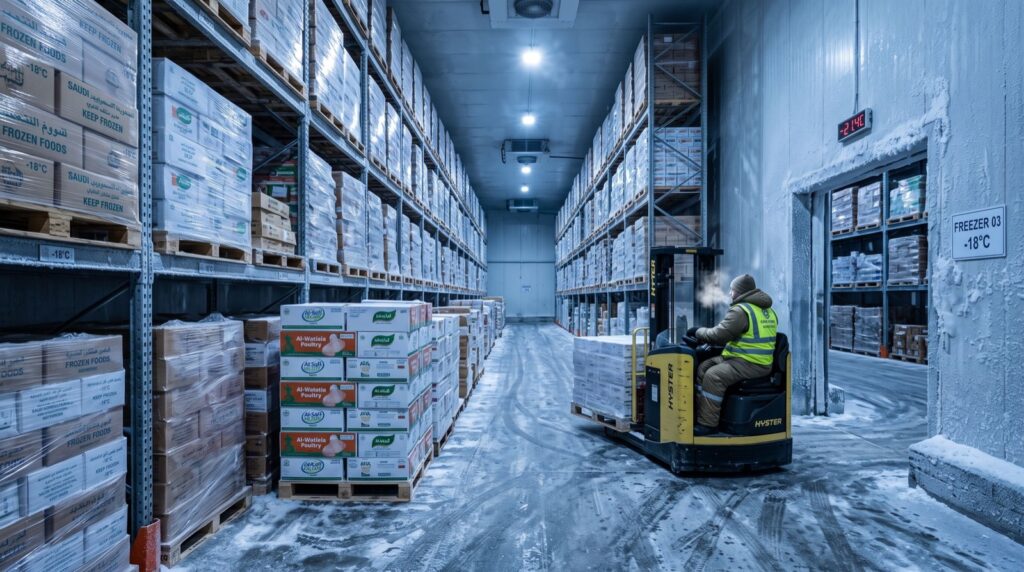
Ambient heat is the enemy. Summer temperatures near the coast regularly push past 40°C, so even a short lapse in refrigeration can spoil a full pallet. A professional facility removes that risk with redundant compressors, temperature logging, and trained handlers who understand the difference between chilled, frozen, and deep-frozen product.
What temperatures should frozen goods hold?
Most frozen food holds at -18°C or colder, the benchmark recommended by global food-safety bodies. Ice cream and certain seafood prefer -25°C. The U.S. Food and Drug Administration explains why consistent freezing halts bacterial growth in its food storage guidance, and the Saudi Food and Drug Authority enforces comparable rules for imported and locally produced goods through its official standards.
Chilled, Frozen, or Ambient: Matching Product to Zone
Not every SKU belongs in a freezer. Storing dry goods in a frozen room wastes energy, while leaving dairy at room temperature invites spoilage. Smart operators split inventory across zones. Shelf-stable stock such as rice, canned goods, and packaging often sits happily in Ambient Storage, freeing your costly freezer space for genuinely perishable lines.
The table below shows how a typical multi-temperature operation allocates product.
| Zone | Temperature range | Typical products | Watch-outs |
|---|---|---|---|
| Frozen | -18°C to -25°C | Seafood, poultry, ice cream | Freezer burn, door dwell time |
| Chilled | 0°C to 5°C | Dairy, fresh produce, meat | Cross-contamination, humidity |
| Ambient | 15°C to 25°C | Grains, canned goods, packaging | Pests, direct sunlight |
How to Choose a Frozen Storage Partner in Jeddah
Picking a warehouse is a long-term decision, so treat it like hiring. The best quality service providers earn trust through transparency, not the lowest quote. Weigh these factors before you sign.
- Redundancy: Backup generators and dual refrigeration lines that keep temperature stable during outages.
- Traceability: Real-time monitoring with alerts and exportable temperature reports for audits.
- Location: Proximity to the port and ring roads to cut transit time and fuel cost.
- Certification: HACCP-aligned processes and SFDA compliance for imported goods.
- Flexibility: Pallet-in, pallet-out billing so you pay for what you use as demand swings.
Follow a simple vetting sequence when you shortlist facilities:
- Request a site visit and inspect the loading dock seal and door discipline.
- Ask for 12 months of temperature logs from an occupied chamber.
- Confirm the backup power switch-over time in seconds, not minutes.
- Review the pest-control and cleaning schedule in writing.
- Test the reporting portal before committing to a contract.
Where Operators Lose Money — and How to Stop It
From years of watching cold rooms run, the biggest losses rarely come from the freezer itself. They come from process gaps. Long dock dwell times let warm air flood a chamber every time a truck backs in. Poor stock rotation buries older pallets behind newer ones, so product expires unseen.
One practical tip pays for itself fast: fit rapid-roll or strip-curtain doors and enforce a two-minute loading window. That single change can shave a noticeable slice off energy bills while protecting product quality.
Is frozen storage expensive to outsource?
Outsourcing usually costs less than owning when you factor in compressors, maintenance staff, insurance, and 24/7 power. A third-party facility spreads those fixed costs across many clients, so you convert heavy capital expense into a predictable per-pallet fee. That flexibility matters when demand spikes during Ramadan or the Hajj season.
Scaling Cold Chain as Your Brand Grows
Growth changes storage needs quickly. A brand that starts with fifty pallets of Frozen Storage in Jeddah can triple volume within a season once retail listings land. Plan for that curve early. Choose a partner with headroom, blast-freezing capacity, and value-added services such as labelling, kitting, and last-mile dispatch.
Integration also matters. A warehouse that syncs stock data with your order system reduces manual errors and speeds fulfilment. In 2026, buyers expect same-day or next-day delivery, and your storage layer either enables that promise or breaks it.
Technology That Keeps the Cold Chain Honest
The best facilities in 2026 run on data, not guesswork. Wireless sensors record chamber temperature every few minutes and push readings to a dashboard your team can check from a phone. If a reading drifts, the system fires an alert before product is at risk, which turns a potential loss into a quick fix.
Barcode and RFID tracking add another layer of control. Every pallet carries a scannable identity, so staff know exactly where each batch sits and when it must ship. That visibility slashes the picking errors that plague manual warehouses and gives you a clean audit trail for any inspection.
Integration ties it together. When your warehouse portal talks directly to your order platform, stock levels update in real time and customers see accurate availability. For a Jeddah food brand juggling dozens of SKUs across seasonal peaks, that connection is the difference between a smooth dispatch and a scramble.
How does blast freezing protect quality?
Blast freezing drives product through the danger zone fast, forming tiny ice crystals that preserve texture and taste. Slow freezing, by contrast, creates large crystals that rupture cells and leave seafood mushy or meat dry once thawed. If you handle premium perishables, confirm your partner offers blast-freezing capacity, not just static cold rooms.
Frequently Asked Questions
What is the ideal temperature for frozen storage in Jeddah?
Aim for -18°C or colder for general frozen food, and -25°C for ice cream and delicate seafood. Consistency matters more than hitting an exact number, so choose a facility with continuous monitoring and alarms.
How quickly should product move from the port to a freezer?
Sooner is always safer. In Jeddah’s climate, aim to move cleared cargo into a cold chamber within a few hours of collection, and insist on refrigerated transport for every leg of the journey.
Can one warehouse handle frozen, chilled, and ambient goods?
Yes. Multi-temperature facilities run separate insulated zones under one roof, which simplifies logistics and billing while keeping each product category at its correct temperature.
Do I need SFDA compliance for imported frozen food?
Absolutely. Imported perishables must meet Saudi Food and Drug Authority standards. A reputable warehouse will hold the documentation and handling processes that keep your shipments compliant and clearance smooth.
Conclusion
Reliable frozen storage in Jeddah protects your product, your margin, and your brand promise in one of the Kingdom’s most demanding climates. Match each SKU to the right zone, vet partners on redundancy and traceability, and tighten dock discipline to stop silent losses. Do that in 2026 and your cold chain becomes a competitive advantage rather than a liability. Ready to secure temperature-controlled space that scales with you? Talk to a specialist team and lock in capacity before the next demand surge.